Did the Promised Land Protect Israel from Demons?
Good questions from a reader: Why do the Gospels record so little demonic activity in Judea proper? And what do we make of Psalm 91, a psalm with a long history of use as a protective text, even an exorcistic one, whose threats are described with the vocabulary of foreign gods? Was the promised land a sacred space that warded off hostile spirits? And if so, why would Israel need a protective psalm at all?
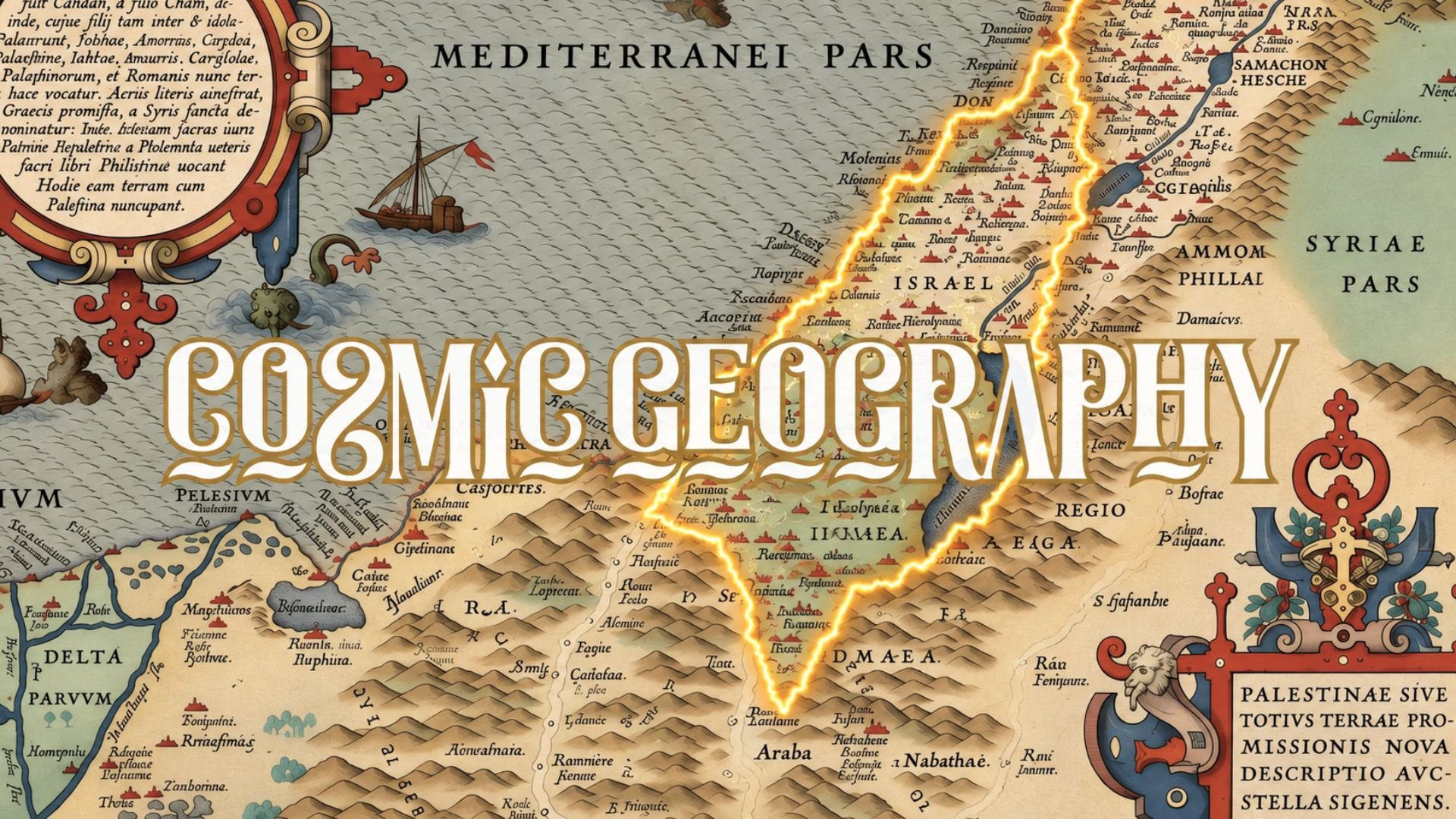
These questions force us to ask what kind of protection, if any, the land of Israel offered to the Israelites. I’ll consider cosmic geography, the covenants, and the Second Temple reception of the Psalms, building on Michael Heiser’s DCW framework as outlined in my recent book, What Is the Divine Council Worldview?
Cosmic Geography and the Gerasene Demoniac
I treat the territorial question in The Gospel is Bigger Than You Think in my chapter on Christ’s kingship. The story of the Gerasene demoniac brings us to Deuteronomy 32:8–9, which establishes the Divine Council Worldview:
When the Most High gave to the nations their inheritance, when he divided mankind, he fixed the borders of the peoples according to the number of the sons of God. But the LORD's portion is his people, Jacob his allotted heritage. (Deuteronomy 32:8–9)
The nations were allotted to lesser elohim, but Israel belonged directly to Yahweh. The gods didn’t rule over Israel, and the logic is, neither should demons.
I postulate in the book that demons weren’t permitted among God’s people but had access to the Gentiles, which is why the demon in Gerasenes seems genuinely confused about why Jesus shows up. “What have you to do with me, Jesus, Son of the Most High God? I beg you, do not torment me” (Luke 8:28). This was his territory. He thought he had done nothing wrong demonizing a Gentile. But notice how the encounter ends. “Jesus then asked him, ‘What is your name?’ And he said, ‘Legion,’ for many demons had entered him. And they begged him not to command them to depart into the abyss” (Luke 8:30–31). Shockingly, this entire army of demons on Gentile ground recognized the authority of Israel’s King.
This helps explain why demonic activity is so rare in the Old Testament and then becomes so prominent in the Gospels. The incarnation was an act of war. The powers intensified their efforts when the rightful King of the Earth arrived, and so we see demons even within Israel during Jesus’s ministry. They’re breaking the rules, basically. I preached a sermon some years back on “Cosmic Geography” that addresses this in much more detail: watchers, rogue gods, and how holy ground functions before and after Christ.
Was the Land a Spiritual Barrier?
I want to be careful not to read the Divine Council Worldview as evidence that the promised land itself functioned as a protective barrier against hostile spiritual powers. Galilee was covenant land, but it’s also where the Gospels concentrate demonic encounters, while Judea proper stays comparatively quiet. Isaiah had already called it “Galilee of the nations” (Isaiah 9:1), and by the first century it was largely Gentile and surrounded by pagan territory. A strict cosmic geography can’t explain that divergence.
But I think there is something interesting when we compare Israel to the nations in Deuteronomy 32. The nations are divided geographically, but Israel is distinguished spiritually and covenantally. Cosmic geography explains how the nations obtained their lands under their gods, while Israel belonged to Yahweh and had to inherit the land. It’s an important distinction if we hold Yahweh as the supreme elohim, unique among them. As Creator, all the earth belongs to him, so his people can live anywhere. The concern, then, is more fundamental. Who are his people?
Psalm 91 and the Foreign Gods
A covenantal understanding helps explain why Psalm 91 focuses on trust in Yahweh rather than protection provided by the land itself. The psalm doesn’t depict the land as hermetically sealed against hostile forces. It addresses threats that require active trust in Yahweh’s sovereignty.
You will not fear the terror of the night, nor the arrow that flies by day, nor the pestilence that stalks in darkness, nor the destruction that wastes at noonday. (Psalm 91:5–6)
The language reflects vocabulary associated with Canaanite and Akkadian divinity which the biblical writers would have encountered in the world around them. But unlike their polytheistic neighbors, they understood these forces as operating under Yahweh’s sovereignty, not as independent or competing authorities. They aren’t autonomous deities encroaching on a rival god’s borders. Psalm 82 makes the point, “God has taken his place in the divine council; in the midst of the gods he holds judgment: ‘How long will you judge unjustly and show partiality to the wicked?’” (Psalm 82:1–2). The gods operate under Yahweh’s headship, even as they rule unjustly.
Sacred Things Are Covenantal, Not Magic
The tabernacle, priesthood, and sacrifices existed to enable Yahweh to dwell among a sinful people without destroying them. Times, places, and objects were considered sacred because they sacramentally embodied the covenant relationship. Yet, they offered no protection when the people turned from God. In fact, covenant unfaithfulness could remove God’s protective presence from among his people. The exile is the clearest example. Israel could not simply presume that the presence of Yahweh’s temple meant he would protect them from their enemies even as they violated their covenant with him. Jeremiah warned them directly, “Do not trust in these deceptive words: ‘This is the temple of the LORD, the temple of the LORD, the temple of the LORD’” (Jeremiah 7:4). The ark illustrates the principle likewise. Israel couldn’t treat it as a magical object that guaranteed victory, and when they did, the Philistines captured it (1 Samuel 4:10–11).
You’ll also notice that the LORD’s portion in Deuteronomy 32:9 is Jacob, a people, not a land. That doesn’t make the land unimportant. The land is central to the covenant promises. But its holiness comes from Yahweh’s presence and relationship with his people, not from some autonomous spiritual property of the territory itself.
So I would not frame Psalm 91 as a psalm for people outside the promised land, or as evidence that the land itself functioned as a spiritual bubble to ward off enemies. The psalm calls the covenant people to trust. “He who dwells in the shelter of the Most High will abide in the shadow of the Almighty. I will say to the LORD, ‘My refuge and my fortress, my God, in whom I trust’” (Psalm 91:1–2). The security is in Yahweh himself.
That also leaves room for hostile spiritual powers to be encountered within the land of Israel. The question is not whether demons can cross the boundary into Israel, but whether they have authority over God’s people as his portion or inheritance. In the Old Testament, covenant unfaithfulness can result in God removing his protection. We see examples of spiritual affliction even within Israel. “Now the Spirit of the LORD departed from Saul, and a harmful spirit from the LORD tormented him” (1 Samuel 16:14). Israel even had to be commanded, “So they shall no more sacrifice their sacrifices to goat demons, after whom they whore” (Leviticus 17:7). Covenant loyalty is therefore directly relevant to the question of Israel's protection from hostile spiritual powers.
Psalm 91 at Qumran
The psalm’s later reception reinforces this covenantal understanding. And I think the Qumran material here is pretty interesting. Two scrolls from Cave 11 help answer our question.
The first is the Great Psalms Scroll, 11Q5, which arranges the Psalter in an order quite different from our Bibles and mixes canonical psalms with compositions we don’t have in our Bibles. Near the end of the scroll there is a prose epilogue, often called David’s Compositions:
And David, the son of Jesse, was wise, and a light like the light of the sun, and a scribe, and discerning, and blameless in all his ways before God and men. And Yahweh gave him a discerning and enlightened spirit, and he wrote 3,600 psalms, and songs to sing before the altar over the daily perpetual offering for every day of the year, 364, and for the Sabbath offerings, 52 songs, and for the offerings of the new moons and for all the festival days and for the Day of Atonement, 30 songs. And all the songs that he spoke were 446, and songs for making music over the stricken, four. And the total was 4,050. All these he spoke through prophecy that was given him from before the Most High. (11Q5 XXVII.2–11)
The word behind “stricken,” pegu’im, is understood here as referring to people afflicted by evil spirits (TDOT, pāg̱aʿ). In other words, the community that copied this scroll believed David himself had written four songs to be performed over the demonized. That fits the picture we already have of David’s music relieving Saul. “And whenever the harmful spirit from God was upon Saul, David took the lyre and played it with his hand. So Saul was refreshed and was well, and the harmful spirit departed from him” (1 Samuel 16:23).
Another scroll, 11Q11, appears to contain those four songs, or something very much like them. It’s a small collection of what appear to be exorcistic psalms, and a version of Psalm 91 appears at the end as the climax of the collection. The incantations are remarkable. One of them, attributed to David, addresses the demon directly:
When he comes to you in the night, you will say to him, “Who are you, offspring of man and of the seed of the holy ones? Your face is a face of nothing, and your horns are horns of a dream. You are darkness and not light, injustice and not righteousness.” (11Q11 V.5–8)
Notice the demon is described as coming from man and the seed of the holy ones, which fits the demonology of 1 Enoch, where demons are the disembodied spirits of the giants, the hybrid offspring of the watchers and human women. (This tradition is highlighted in The Watchers and the Holy Ones.) The incantation then consigns the spirit to the underworld:
Yahweh will bring you down to deepest Sheol, and he will shut the two bronze doors through which no light passes, and the sun that rises on the righteous will not shine for you. (11Q11 V.8–11)
Another column invokes an angel sent by Yahweh:
Yahweh will strike you with a great blow to destroy you, and in his fierce anger he will send against you a powerful angel to carry out his whole command, who will show you no mercy, who will bring you down to the great abyss, to deepest Sheol. (11Q11 IV.4–8)
Next, the scroll’s version of Psalm 91 is epigraphed, “Of David,” a superscription our canonical text lacks. The preceding line curses “[all the] sons of Belial” before the familiar words begin, “He who dwells in the shelter of the Most High will abide in the shadow of the Almighty” (Psalm 91:1). The psalm closes with a congregational response, “And they answer, ‘Amen, amen.’ Selah” (11Q11 VI.14), which suggests these texts were performed liturgically, likely chanted over the afflicted to ward off or expel unclean spirits.
If the DSS version were to appear in your Bible today, the Psalm might look something like this (my reconstruction):
Psalm 91
He will destroy all the sons of Belial. Amen, amen. Selah.
Of David.
¹ He who dwells in the shelter of the Most High abides in the shadow of the Almighty, ² the one who says to Yahweh, “My refuge and my fortress, my God, the trust in which I trust.” ³ For he will deliver you from the snare of the fowler, from the pestilence of destruction. ⁴ With his pinions he will cover you, and under his wings you will dwell. His steadfast love is a shield over you, and his faithfulness a buckler. Selah.
I talk about this material a bit more in a video on the Dead Sea Scrolls exhibit at the Reagan Library. As a caveat, I would be cautious about making too much of these texts, since their precise purpose is debated. But they do show, pretty undeniably, that Psalm 91 had developed an association with spiritual protection and exorcism by the Second Temple period. And notice that the scroll’s logic is the same covenant logic we saw in the psalm itself. The exorcist’s authority is not territorial. The demon is expelled because Yahweh made heaven and earth, and the spirit has no rightful claim over the righteous.
Conclusion: The Cross
So, was the promised land a spiritual barrier against demons? I don’t think the biblical evidence allows us to understand it that way. Israel’s protection was based on their covenant relationship with Yahweh, not in the land itself. The land was holy because Yahweh dwelt among his people, but when Israel rejected the covenant, Yahweh could withdraw his presence and protection. Psalm 91 calls God’s people to trust in Yahweh as their refuge rather than in any particular place. Further, the Qumran material shows that Psalm 91 was later used in the context of spiritual protection and exorcism. But even there the authority belongs to Yahweh.
The picture changes again after the cross. Paul can call the Devil “the god of this world” who “has blinded the minds of the unbelievers” (2 Corinthians 4:4), and John can write, “We know that we are from God, and the whole world lies in the power of the evil one” (1 John 5:19). Yet Jesus sends his disciples into those nations: “All authority in heaven and on earth has been given to me. Go therefore and make disciples of all nations” (Matthew 28:18–19). Holy ground is no longer restricted to one territory. God’s people bring his presence into every nation with the message of the Gospel.
What matters is who belongs to Yahweh. In the Old Testament, identification with Yahweh was for Israel and came through the covenant. In Christ, the Gospel goes to the nations, since God’s people are not defined by cosmic geography.
