What is Jesus’ real name? (And what should we call Jesus?)
The name of Jesus is traced from its Hebrew origin, Yeshua—meaning “Yahweh saves”—through its Greek and Latin forms and into modern languages, showing that variants such as “Jesus,” “Iesous,” and “Iesus” result from ordinary patterns of translation rather than theological corruption. Claims that only reconstructed Hebrew pronunciations, such as Yahshua or Yahusha, are spiritually valid lack historical and linguistic support, whereas the polemical name Yeshu comes from later Jewish–Christian conflict rather than authentic first-century usage. The name Yeshua was common in Jesus’s time, and Christian reverence later set it apart, so that the New Testament ultimately identifies Jesus with the divine name Yahweh, emphasizing that faith in his person and saving work matters more than insisting on any single linguistic form.
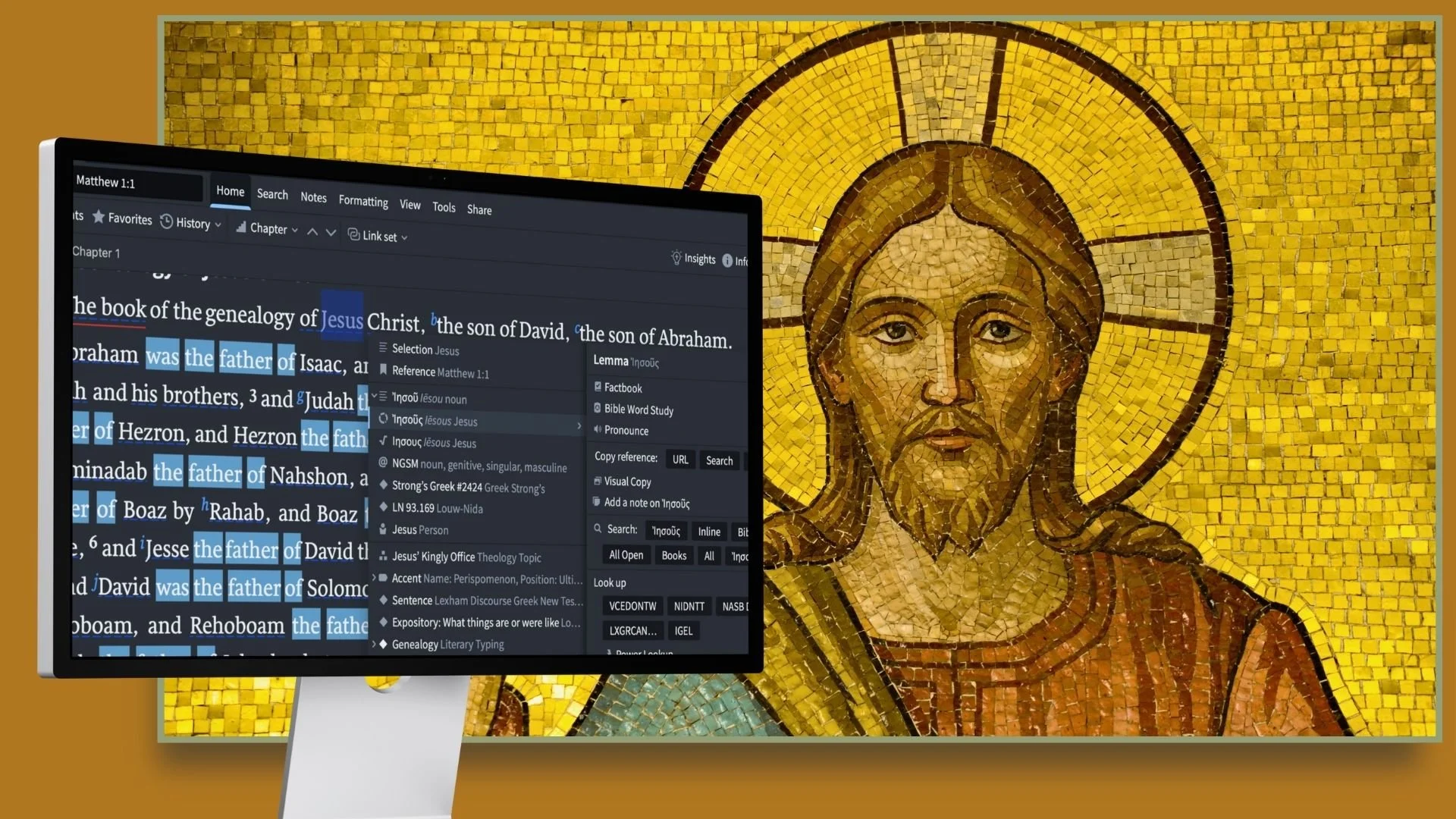
It’s common for people moving to the United States from abroad to adopt anglicized names, particularly if they're from an Asian country where writing and pronunciation differ dramatically. My friend Josue’s family is from El Salvador. He goes by Josh at home, where his family speaks primarily Spanish. It’s supposed to be a bit of an ironic joke, since he uses his birth name publicly and his anglicized name at home. Many people in the United States do the opposite, using their given name at home but an anglicized name in public. We see the same phenomenon in the Ancient world, particularly regarding the name of Jesus.
Jesus is an anglicized translation, which means it is pronounced differently across languages today. Italians say Gesu (jeh-ZOO), Greeks say Iesous (ee-ay-SOOS), Mandarin speakers say Yesu (yeh-SOO), and in Russian it is Iisus (EE-soos). The differences are features of translation into modern languages and are not, in any sense, meant to make a theological statement. Still, some groups insist that “real” Christians must use the original, authentic form of Jesus’s name, and a few go so far as to tie correct spelling and pronunciation to salvific faith, drifting into sectarian or cultic thinking.
The issue is further complicated by history and language. The New Testament was written in Greek, yet Jesus almost certainly spoke Aramaic in daily life and was likely familiar with Hebrew in Scripture and in the synagogue. At the same time, Hebrew is often treated as the most sacred or original biblical language because of its association with the earliest covenants (though that claim is nuanced). Before asking whether Scripture requires Christians to use any specific form of Jesus’s name, it helps to survey the primary name forms and understand their origins.
Variant Forms of Jesus’s Name
Yeshua
The name Yeshua is rooted in the Hebrew personal name Yehosua (later shortened in the postexilic period to yesuʿa), meaning “Yahweh is help” or “Yahweh saves.” In contrast, the Greek New Testament roughly transliterates the name Yehosua as Iesous. The name also appears frequently in extrabiblical Jewish and Greco-Roman records from the late Second Temple period. Forms of Yeshua were also common names in first-century Israel, which is why Jesus was often identified by geographic qualifiers such as “Jesus of Nazareth.”
As Christianity moved westward into the Latin-speaking Roman world, Iesous became Iesus, a linguistic shift that will be detailed further. The shift helped contextualize Jesus’s name for new audiences who spoke other languages, but it also further distanced it from its Hebrew history and from its Old Testament counterpart, which in today’s English is written as Joshua. In modern English-speaking contexts, the renewed use of Yeshua is most common among Messianic Jewish communities, Hebrew Roots groups, and other Christians seeking to emphasize Jesus’s Jewish identity and the historical setting of the New Testament.
Yahshua / Yahusha / Yahuwah-derived forms
Forms such as Yahshua, Yahusha, and other Yahweh-derived reconstructions arise primarily from the Sacred Name Movement (derivative of the Church of God, Seventh Day) and certain Hebrew Roots circles, which argue that Jesus’s name must explicitly contain the divine name Yah and that only a reconstructed Hebrew pronunciation is spiritually valid. These groups irrationally claim historical and linguistic authority, but the biblical, literary, and historical evidence simply does not support their conclusions. In fact, the standard Hebrew name underlying “Jesus” already contains the divine name in its etymology. It literally means “Yahweh is help” or “Yahweh is salvation,” and this form was in common use among Jewish communities from the postexilic period through the early Christian era. In other words, the theological connection to Yahweh is already embedded in the names we use in most Christian Churches today (e.g., Jesus in English) and in virtually every modern language.
Linguistically, reconstructed forms like Yahshua and Yahusha rely on speculation, as there is no actual manuscript evidence supporting their use or even their historicity. Even the pronunciation of Yahweh itself is arguable, since the divine name fell out of regular spoken use during the Second Temple period. Any modern reconstruction, even of the name Yahweh, is provisional (though we know Yahweh is at least closer to the original than Jehovah—an intentional reconstruction of the covenant name). The historical record instead indicates that Jesus’s name was ordinary, widely used, and religiously acceptable within both Palestinian and diaspora Judaism. As a result, claims that only certain pronunciations are spiritually legitimate lack credible historical grounding.
Yeshu
The form Yeshu is a shortened Hebrew or Aramaic variant of the name underlying Yeshua, and it appears in certain rabbinic and post-biblical Jewish sources, sometimes in the phrase Yeshu ha-Notzri (“Yeshu the Nazarene”). This name appears in Talmudic references and later Jewish polemical literature, including medieval texts such as the Toledot Yeshu, where it often carries a critical or dismissive tone. Yeshu developed within Jewish–Christian controversy rather than as a simple name variant and is not considered a valid historical name.
Old Testament Roots of Jesus’s Name
It’s not lost on me that Jesus sounds almost nothing like Yahweh. But it is very closely related. As mentioned, Jesus comes into English through Latin Iesus, which is simply the Latin spelling of the Koine Greek Iesous. Working backward, Koine Greek Iesous is a Greek transliteration used by Greek-speaking Jews before the time of Christianity. The Septuagint (the Greek OT) already used Iesous as the standard way to render the Hebrew name behind Joshua (and related postexilic forms) because Greek lacked certain Hebrew sounds (such as “sh”) and Greek names typically required a masculine ending to function grammatically. The same Greek form, Iesous, can refer to Jesus or Joshua, depending on context (e.g., Hebrews 4:8).
Additionally, the Semitic name used among Jews in the Second Temple period is the Hebrew, Yehosua (the longer form traditionally rendered “Joshua”) and its later shortened form Yeshua (often rendered “Jeshua” in postexilic books). In everyday first-century life, Yeshua accords with the Aramaic environment of Galilee and Judea (Aramaic being the common spoken language for many Jews at the time), which helps explain why “Yeshua” is widely regarded as the closest practical Semitic form in Jesus’s setting, even when the New Testament itself preserves the Greek form.
Finally, Yeho contains a theophoric element that points to Yahweh or Yah. The rest of the name is connected to the Hebrew idea of saving/help/deliverance, so the name is commonly glossed as “Yahweh saves” or “Yahweh is salvation.” That means the “Jesus/Joshua/Yeshua” family of names always carried a built-in confession of Yahweh as the Savior of God’s people, long before debates over which pronunciation is most authentic.
Tracing the name’s linguistic roots helps us see how Jesus, Iesous, and Yeshua are historically and theologically connected to the Divine Name. But there is another important layer to this discussion, namely, how common it actually was in the Second Temple period. Modern readers often assume Jesus’s name was unique or inherently sacred, yet both historical records and the New Testament itself suggest otherwise.
The name Jesus (that is, Yeshua or Joshua) circulated widely among Palestinian Jews and diaspora communities in the pre-Christian and early Christian eras. The Jewish historian Josephus records at least nineteen individuals with this name, many of them contemporaries of Jesus of Nazareth. Archaeological evidence, including ossuaries and inscriptions from Jerusalem written in Hebrew, Aramaic, and Greek, confirms its popularity, even preserving names such as “Joshua son of Joseph.” The New Testament contains the same evidence. Luke’s genealogy lists an ancestor named Jesus without comment (Luke 3:29); Colossians 4:11 mentions a Jewish Christian named Jesus (also called Justus); and early textual evidence indicates that Barabbas may originally have been called Jesus Barabbas (Matthew 27:16-17), a reading later suppressed, perhaps out of reverence (e.g., Syriac Sinaiticus, Curetonian Syriac; Origen also comments on this variant in his 3rd century Matthew commentary).
Over time, Christian devotion transformed how Jesus’s name was treated. As Christians increasingly reserved the name Jesus for Jesus of Nazareth alone—honoring him as “the pioneer and perfecter of our faith”—the name gradually ceased to be used as an ordinary personal name within Christian communities (though it reemerged, e.g., in Spanish as “Jesus”). Emphasising reverence for Jesus’s name affects manuscript transmission and later translation traditions, thereby obscuring how ordinary and widespread the name actually was in first-century Jewish life.
What is Jesus’s name? (Jesus and the Divine Name of Yahweh)
In the New Testament, Jesus shares in and embodies the divine name Yahweh; he is Yahweh incarnate. In Israel’s Scriptures, God’s covenant name was used with particular reverence. It appears nearly 7,000 times in the Old Testament, and Jewish tradition frequently referred to it simply as “the Name.” To possess or bear the Name was to represent Yahweh himself.
The New Testament applies this Name Theology to Jesus. In Philippians 2:9-11, Paul declares that God has given Jesus “the name that is above every name,” so that every knee will bow and every tongue confess his lordship. Theologically, we understand the name of Jesus as Yahweh, as Philippians 2 explicitly cites Isaiah 45:23, which states that Yahweh alone declares that every knee will bow to him. Paul’s point is that the worship due exclusively to Yahweh belongs to Jesus. Likewise, Paul regularly calls Jesus “Lord,” a title that, in the Greek Old Testament (the Septuagint), substitutes for the divine name Yahweh. This means that calling Jesus “Lord” identifies him as or with Yahweh.
Further, the connection between Jesus and Yahweh is explicit in Romans 10:9-13, where confessing “Jesus as Lord” is hyperlinked to Joel 2:32’s promise that “everyone who calls on the name of Yahweh shall be saved.” For Paul, calling upon Jesus is not separate from calling upon Yahweh, but the (exact) same act of saving faith directed toward the same Divine Name. Similarly, in Matthew 28:19, Jesus describes the Father, Son, and Holy Spirit as sharing a single “name,” reinforcing the idea of a shared divine identity within the Godhead rather than a tritheistic expression of God.
In John’s Gospel, Jesus declares that he has been given the Father’s name, has manifested that name, and keeps believers within that name (John 17:6, 11-12). John portrays Jesus as the visible, incarnate revelation of Yahweh himself, the embodiment of the divine Name. Jesus does not simply speak for God as a prophet; he reveals God by being God in the flesh. Jesus declared, “Whoever has seen me has seen the Father” (John 14:9). Jesus can make this claim because he is “the image of the invisible God” (Collossians 1:15). In this way, the fullest answer to the question What is Jesus’s name? is not Jesus or Yeshua, but Yahweh, the covenant God of Israel revealed personally and fully in God the Son. This, however, is a theological claim more than a practical one, leading to the next part of the discussion.
So, what should we call Jesus?
Indeed, there are many things we could call Jesus: Immanuel, the Alpha and Omega, Son of Man, Christ, Yahweh, and so on. All would be acceptable. The necessity of using a specific Hebrew pronunciation of Jesus’s name is consistently rejected in conservative scholarship. Both history and linguistics demand more thoughtful reflection on this point. The name Jesus should never be seen as a corruption. Rather, we merely see the natural transmission of the Hebrew Yeshua (Yahweh saves) in Greek and Latin, and into modern languages. Early Christians did not invent a new name or impose a foreign identity on the Christ when they called him Jesus—there’s nothing sinister here—they simply carried his historically Jewish name across languages in the ordinary patterns of the ancient Mediterranean world. In my estimation, what some modern movements emphasize as a recovery of the authentic name is better understood as a contemporary preference rather than a biblical mandate, and, even if preferred for theological reasons, is entirely unnecessary and often confusing.
Theologically, Scripture emphasizes faith in Christ’s person and saving work. God has always revealed himself through multiple names across cultures and covenants, and Jesus himself accepted a range of faithful designations without correcting those who addressed him in sincere trust. Indeed, the New Testament celebrates a redeemed people drawn from every nation, tribe, and language. That promise is reflected in our linguistic diversity. As an English speaker, I find that ‘Jesus’ is the most realistic way to address him. Do you speak another language? How does your language translate his name from the Greek? How do you address him?
