The Way of Eden
by Jonathan Dillon
Before the darkness of sin descended onto our world, there was a time when God walked with mankind beneath the branches of a garden, and all was right with the world. It is hard now to imagine it, for we live in a world shaped by deceit and violence, but even in the darkness there is light. God is yet at work in his creation, and this book is a calling to remember what once was and what will be again. It is a calling to not lose hope, but to resist the darkness, not through violence or hatred, but by cultivating the fruit of the Spirit. A calling to remember that though we stand outside the garden, God is yet with us.
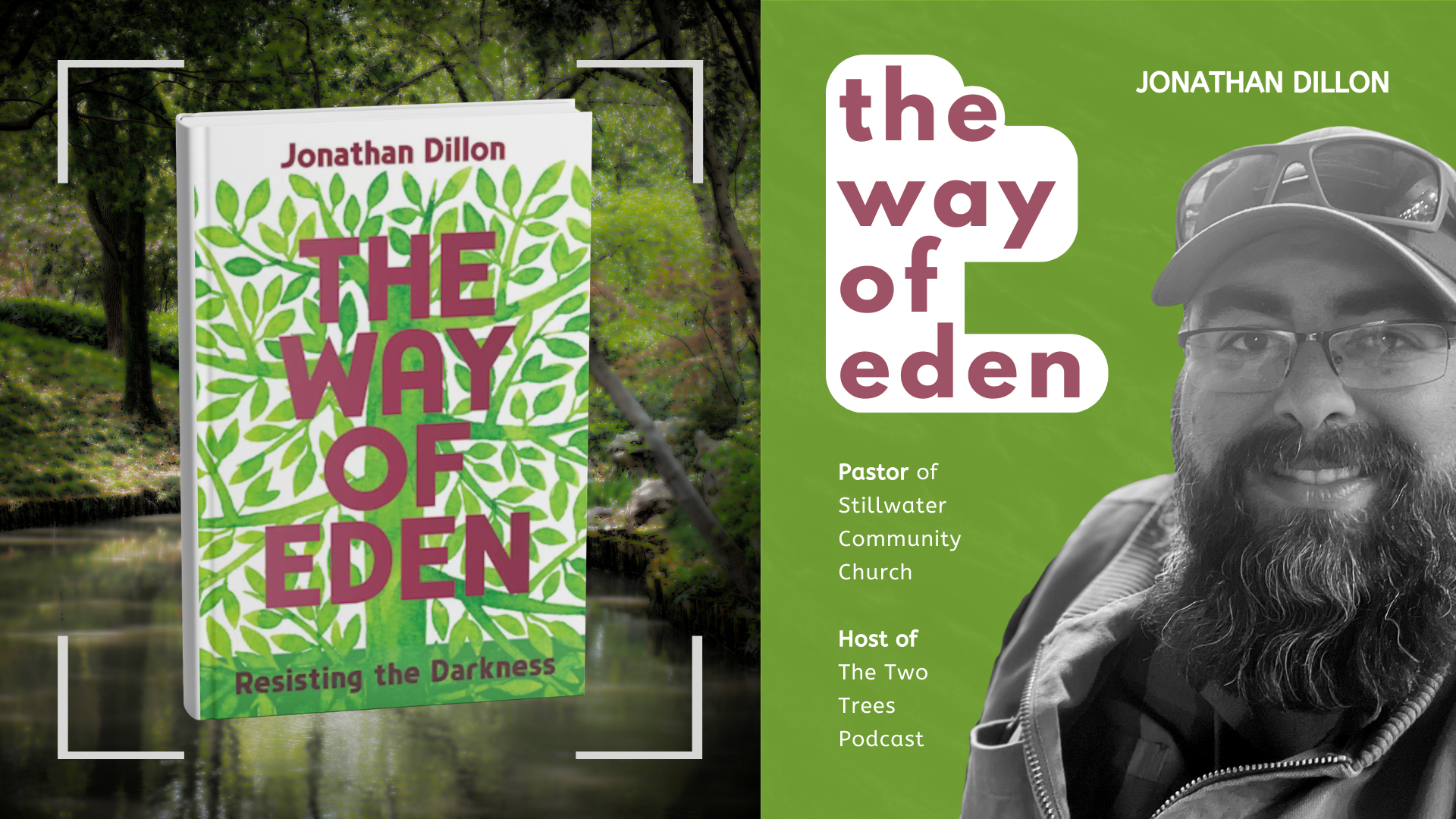
The Way of Eden
Publication Information
Title: The Way of Eden, Resisting the Darkness (Purchase from Amazon in Paperback or Kindle)
Author: Jonathan Dillon
Dedication: For my Sons
Publisher: Resource Publications (Wipf and Stock Publishers)
Published: 2025-12-18
ISBN (Paperback): 979-8-3852-6479-7
ISBN (Hardcover): 979-8-3852-6480-3
ISBN (eBook): 979-8-3852-6481-0
Scripture Translation Used: English Standard Version (ESV)
Overview
Dillon describes the book’s purpose as “a return to the values of the Garden, to the sermons of Christ” (4). He envisions the Christian life as a retrieval of Paradise, which is carried out through Christ’s work and teaching. The problem the book addresses is that our souls long to return to God, yet we are far from him. “Truly it is not Eden’s beauty our souls are reaching for; beauty and natural wonder we have in abundance. It is that there, we were at home. God walked with us, and all was as it should be” (2). In The Way of Eden, we learn to long for the Garden as a return to the presence of God, remembering that “the garden lies behind us, but it also lies ahead of us” (2).
The Way of Eden is beautifully written literature, carefully crafted with imagery and rhythm. The book is faithful to the biblical-theological narrative of Scripture without trying to be a technical theology text. It’s an ‘every man’s’ book. The Way of Eden moves naturally from Eden to exile and then from Christ to eternal hope without flattening the theology of the biblical narrative into a single event. But again, it’s not a theology book, nor is it self-help. It is a meditation of pastoral concern that is meant to be lived with. It’s short, but not embarrassingly so, and intended for all audiences to experience a profound sense of wonder in the return to Paradise.
I appreciate the reflection questions at the end of each chapter. They are genuinely helpful and match the chapter’s themes. The questions will function well for small groups, discipleship contexts, or personal reflection. I hope folks will engage with these to slow the reader down, creating a sense of meditation on the Scripture and theology presented in each chapter.
Table of Contents
World without End
The Way of Babylon
Pockets of Eden
Gardeners in Exile
The Resistance of a Peaceful People
Dominion or Dominance?
Songs of Exile
The Garden of Sorrow
Trees Planted by Streams of Water
Music in the Trees
Pockets of Eden (Chapter 3)
This was my favorite chapter, so I’d like to provide some of my own analysis here. After listening to the Two Trees Podcast for eons and being a student of biblical theology myself, I felt Jon Dillon did something pretty incredible with his reflections on Eden in the present day. These pockets are small, ordinary spaces where God’s reign is visible even while we are in exile. Eden was the plan in the beginning. Anyone who has read the Bible knows that. Paradise (i.e., Eden or the Garden) is the plan for eternity in Revelation 21-22—any biblical theologian knows that. But also, Eden exists in small spaces or pockets in the here and now.
For Dillon, these pockets are places marked by prayer, hospitality, beauty, patience, peacemaking, lament, and presence. I have often described local churches and even Christian homes as microcosms of Eden, places where we have authentic communion according to the Holy Spirit and where Christ reigns as he did in the Garden—places of true communion. When we are in these pockets, we should be perceived as those who believe Christ is King, even within a world that longs for wealth, power, and spectacle. In that sense, pockets of Eden are not meant to be an escape from reality. They are a way to prevent Babylon from defining what counts as real in the Christian life. They keep us connected to Heaven while we are sojourners in a foreign land.
Further, we should not think of Eden as a place of ease; rather, the Scriptures describe it as a working Garden where God dwells with humanity and entrusts them with responsibility. Adam and Eve are gardeners before they are anything else. Exile has made our calling difficult, but the Dominion Mandate is still in place. Eden helps with that. So, Dillon points us to Psalm 23 because, here, the Psalmist refuses to believe that God’s presence results in entirely safe circumstances. The table is set with enemies still nearby. Eden, for now, is the reality of God’s presence and the Tree of Life that is eternally before us.
Babylon is the counter-vision that makes pockets of Eden necessary in the first place. Dillon is careful not to see Babylon as a single empire or political moment. Instead, it’s a pattern that runs from Babel forward, a way of organizing life around pride, control, and self-made securities (and perhaps—my thoughts—a commentary on socio-political issues in the interadvent period). Much of Babylon’s power comes from its ability to persuade people to abandon the God-given desires of Eden, the desire to live godly lives in Christ Jesus.
So, the Psalms help us with a language for living in that tension. They speak of God as a Shepherd, for example, because God is not just beyond comprehension as some infinite, untouchable force. God is also imminent. He is close enough to sympathise with us in weakness. Images of feasting and abundance reveal a God who provides for the vulnerable and restores dignity to the oppressed. This is where pockets of Eden come in. These pockets anticipate Eden breaking into Babylon to recreate it.
Commendation ⭐️⭐️⭐️⭐️⭐️
I think Jon Dillon did a great job with this book, and I highly recommend it as a biblical-theological-devotional. Great timing with the New Year coming up. Follow Jon at the Two Trees Podcast, and don’t forget to pick up a copy.
Bible verses about Eden
Genesis 2:8 “And the LORD God planted a garden in Eden, in the east, and there he put the man whom he had formed.”
Genesis 2:9 “And out of the ground the LORD God made to spring up every tree that is pleasant to the sight and good for food. The tree of life was in the midst of the garden, and the tree of the knowledge of good and evil.”
Genesis 2:15 “The LORD God took the man and put him in the garden of Eden to work it and keep it.”
Genesis 3:22–23 “Then the LORD God said, ‘Behold, the man has become like one of us in knowing good and evil. Now, lest he reach out his hand and take also of the tree of life and eat, and live forever—’ therefore the LORD God sent him out from the garden of Eden to work the ground from which he was taken.”
Genesis 3:24 “He drove out the man, and at the east of the garden of Eden he placed the cherubim and a flaming sword that turned every way to guard the way to the tree of life.”
Ezekiel 28:13 “You were in Eden, the garden of God; every precious stone was your covering…”
Ezekiel 31:8 “The cedars in the garden of God could not rival it, nor the fir trees equal its boughs… no tree in the garden of God was like it in beauty.”
Isaiah 51:3 “For the LORD comforts Zion; he comforts all her waste places and makes her wilderness like Eden, her desert like the garden of the LORD; joy and gladness will be found in her, thanksgiving and the voice of song.”
Joel 2:3 “Fire devours before them, and behind them a flame burns. The land is like the garden of Eden before them, but behind them a desolate wilderness, and nothing escapes them.”
Revelation 22:1–2 “Then the angel showed me the river of the water of life, bright as crystal, flowing from the throne of God and of the Lamb… also, on either side of the river, the tree of life with its twelve kinds of fruit, yielding its fruit each month.”
