What is the Nicene Creed?
The Nicene Creed is a foundational statement of Christian faith that emerged from the early church’s need to address theological controversies, particularly Arianism–a heresy that denied the full deity of Christ by claiming He was a created being. Also known as the Nicene-Constantinopolitan Creed, it holds a unique place in Christian history as the only creed universally accepted by Eastern Orthodox, Roman Catholic, and Protestant churches. While earlier creeds like the Old Roman Symbol existed, the Nicene Creed provides the first detailed affirmation of Christ’s divinity and the Holy Spirit’s deity that gained ecumenical acceptance. The creed systematically addresses key doctrinal issues, carefully articulating orthodox beliefs about the Trinity and the nature of Christ (Christology) in response to various heresies that threatened the church’s understanding of these essential doctrines.

Gospel Meaning and Definition
The definition and meaning of the Gospel are examined through the perspectives of the Apostle Paul, Jesus himself, and contemporary theological understanding. While Paul emphasizes Christ's death, resurrection, and lordship, and Jesus focused on announcing God's Kingdom, the full Gospel encompasses both perspectives; it is fundamentally the good news that Jesus is King, bringing God's rule to earth through his incarnation, death, resurrection, and eventual return. The Gospel extends beyond mere historical events to represent God's comprehensive plan to restore all creation through Christ, offering hope of redemption, adoption into God's family, and the promise of cosmic renewal when Christ returns to fully establish his Kingdom.
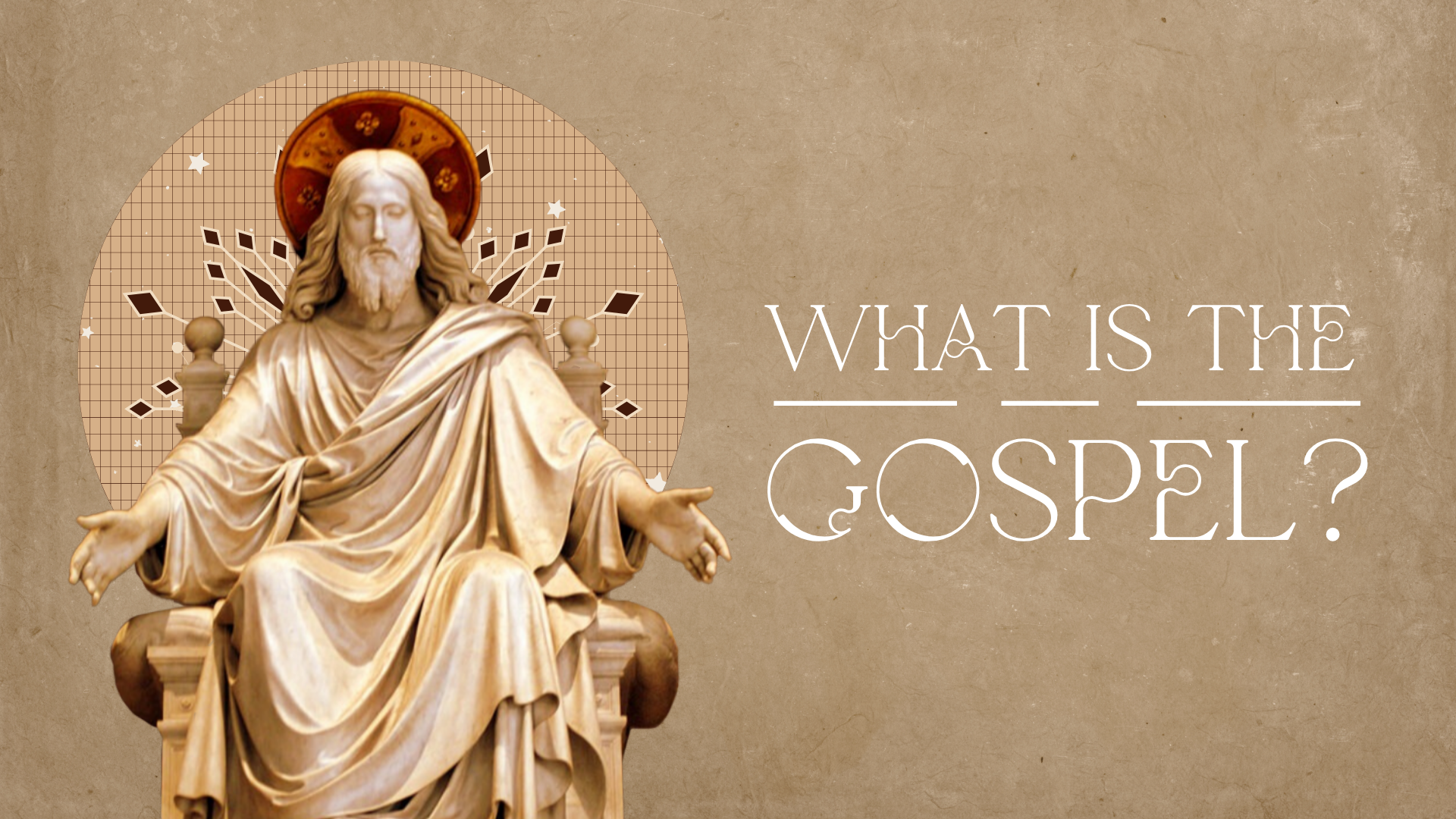
What is the Gospel?
It’s bigger than you think. The Gospel isn’t merely a message that Jesus died for your sins so you can go to heaven. Indeed, that’s part of it, but the Gospel encompasses the entire biblical narrative from creation to consummation. The Gospel proper is that Jesus is King. From this foundational truth flow various Gospel effects that shape how we understand salvation, transformation, and our place in God's Kingdom.

What Are the Gospels?
The term “Gospel” refers to the first four books of the New Testament–Matthew, Mark, Luke, and John. These foundational texts contain the testimony of Jesus Christ's life, ministry, death, and resurrection. While modern readers might expect conventional biographies, the Gospels are a unique ancient biographical form that aims to demonstrate Jesus’s identity as Israel’s promised Messiah and accomplish their authors’ theological purposes.

Theomythology as a Framework for Biblical-Theological Preaching
Story matters. It may be the most powerful way God communicates to his people in the scriptures, yet many modern preachers engage the Bible exegetically, searching for propositional truths about God. This is how seminaries classically teach hermeneutics–the careful parsing of grammar to derive surface-level meaning. Yet, the way a preacher engages the story exegetically and how it is presented homiletically will affect its response. Theomythology, to be defined herein, provides a framework for narrative analysis in the context of biblical theology for preaching biblical-theological messages to theopathically engage listeners. Terms must first be defined before theomythology can be analyzed in the context of biblical theology. Further, biblical theology's place in preaching must be addressed before comparing the teaching and doing of theology.

THE DIVINE IDENTITY OF JESUS AS YAHWEH IN THE SCRIPTURES AND SECOND TEMPLE JEWISH THOUGHT
The divine identity of Jesus as Yahweh is evident in the New Testament and Second Temple Jewish literature. The New Testament presents Jesus not only as the Messiah but also as Yahweh incarnate, demonstrated through His divine roles, such as creator and forgiver of sins. The concept of the "Two Powers in Heaven" from early Jewish thought, which describes two divine figures sharing authority, aligns with early Christian views of Jesus. Additionally, some Jewish groups during the Second Temple period held expectations of a divine Messiah, as seen in texts like 1 Enoch and the Psalms of Solomon, which depict the Messiah with divine attributes. These sources affirm that Jesus is portrayed as the incarnate Yahweh in both scriptural and Second Temple contexts.

Covenant Membership in Christ (Circumcision of the Heart)
This article, based on Romans 2:17-29, explores the transformative nature of covenant identity through faith in Christ. Paul critiques the Jewish reliance on external markers, such as circumcision and possession of the law, to define their identity as God's people. He argues that true righteousness comes not from lineage or religious rituals, but from an inward change brought about by the Holy Spirit. The message is divided into three key points: (1) Misplaced Confidence in the Law, where Paul challenges self-identification through outward signs without obedience; (2) Failing to Keep the Law, which highlights Jewish hypocrisy and its damaging effect on their witness to the Gentiles; and (3) Redefining Covenant Identity, where Paul reorients covenant membership around inward transformation, fulfilled through faith in Christ and obedience to the Spirit, calling for heart transformation over external rites.

3 Ways Demonic Powers Are at Work Today
The Bible repeatedly addresses the activities of demons, the devil, Satan, and the powers of darkness. Interpretations and beliefs about these entities may vary. Some believe the demonic powers are mere metaphors for speaking about things we don’t understand. Others believe the ancient people created the idea of spiritual beings to describe evils in the heart of humankind. However, the most natural reading of the scriptures would indicate that there are fallen and evil beings in unseen places that war against righteousness in the cosmos and on earth, potentially through intermediaries. Here are three things the Bible says about demonic activities pertinent to contemporary events. I’ll leave much of the analysis of current events to your imagination, as my intent here is merely to demonstrate ways demonic powers are still on the job.
The Divine Council Worldview (DCW)
The Divine Council Worldview (DCW) posits that a heavenly assembly of spiritual beings exists under the authority of the supreme God, both ordering the cosmos and human destiny. Its origins are seen in ancient Near Eastern religions such as Mesopotamian, Egyptian, Canaanite, and Hittite traditions, which depicted divine assemblies governing the world. The Bible engages with this worldview, describing God’s appointment of the nations to spiritual rulers, their subsequent rebellion, and God’s ultimate judgment over them. Key themes include the reality of lesser elohim, the hierarchy of heavenly beings, and the compatibility of the DCW with biblical monotheism. Ultimately, the Scriptures use divine council language to demonstrate Yahweh’s unrivaled supremacy over all spiritual powers.

The Unseen Battle: Spiritual Warfare, the Three Rebellions, and Christ’s Victory Over Dark Powers (by Joel Muddamalle)
Weaving through the Old and New Testaments, Joel Muddamalle uses Paul's supernatural household framework—the idea that God has both a supernatural and a human family—to explain the cosmic worldview of the Bible. Cutting through the noise of conspiracy theories and fanaticism, the theological framework in The Unseen Battle will give readers a biblical and balanced understanding of spiritual warfare.
Where is the Garden of Eden?
Before the darkness of sin descended onto our world, there was a time when God walked with mankind beneath the branches of a garden, and all was right with the world. It is hard now to imagine it, for we live in a world shaped by deceit and violence, but even in the darkness there is light. God is yet at work in his creation, and this book is a calling to remember what once was and what will be again. It is a calling to not lose hope, but to resist the darkness, not through violence or hatred, but by cultivating the fruit of the Spirit. A calling to remember that though we stand outside the garden, God is yet with us.