Books


The “seven spirits” and “seven churches” in Revelation should be understood through biblical numerology and the Divine Council Worldview, where numbers like seven, ten, four, three, forty, and seventy carry theological meaning within Scripture itself. After explaining how these numbers function—especially seven as divine initiative and completeness—we see how Deuteronomy 32 and Psalm 82, drawing on von Rad to show that God appointed heavenly beings as caretakers over the nations, with Israel uniquely belonging to Yahweh. That backdrop then frames Revelation’s imagery: the seven churches represent the fullness of the church in all times and places, the seven lampstands signify each church’s heavenly legitimacy before Christ, and the seven stars are the angels of those churches, held in Christ’s right hand. Unlike the rebellious “sons of God” over the nations, these angels faithfully guard and govern the churches, preserving their lampstands. The episode concludes by urging churches to recognize the spiritual reality of their gatherings. Christ walks among the lampstands, through his angels, while cautioning against angel-focused devotion and reaffirming the sufficiency and kingship of Christ.
Why do the Gospels record so little demonic activity in Judea proper? And what do we make of Psalm 91, a psalm with a long history of use as a protective text, even an exorcistic one, whose threats are described with the vocabulary of foreign gods? Was the promised land a sacred space that warded off hostile spirits? And if so, why would Israel need a protective psalm at all?
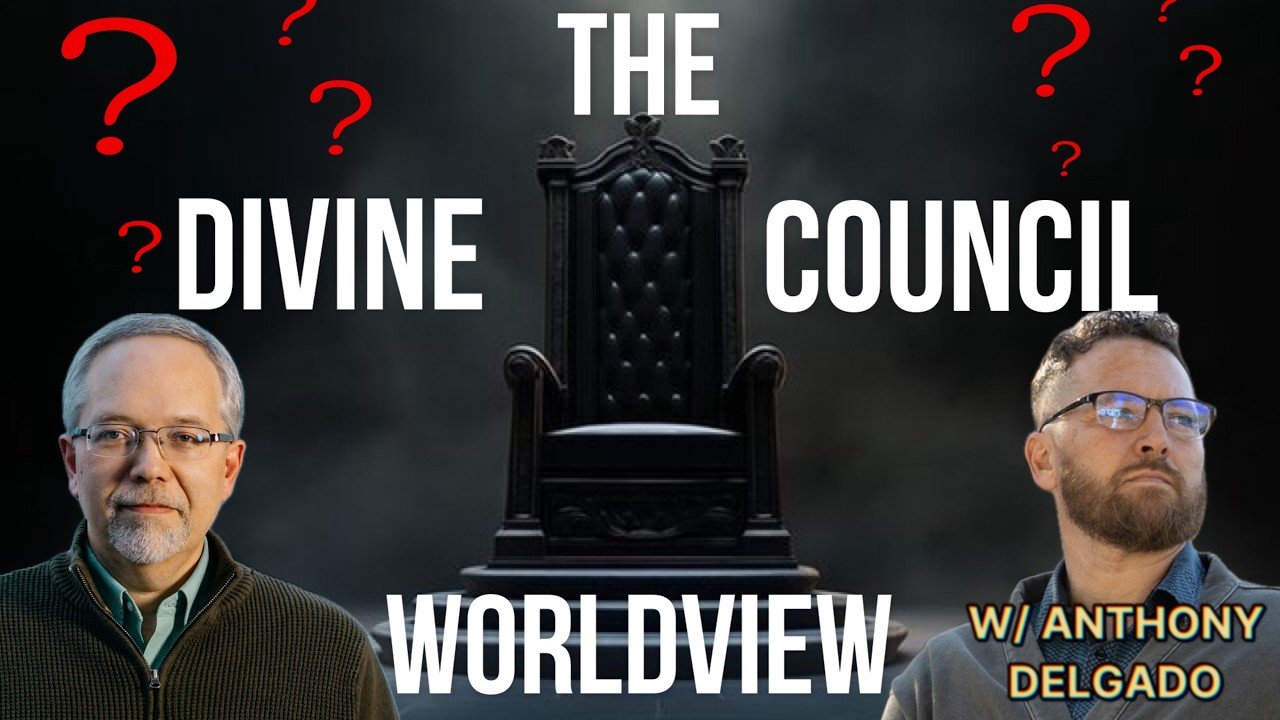
In this episode of Ring Them Bells, host Jason Bostow interviews Anthony Delgado about his book What is the Divine Council Worldview? The Supernatural Story Our Materialist World Needs. Anthony Delgado is the lead pastor of Palmdale Church in Palmdale, California, and the founder of Biblical Reenchantment, which includes the Biblical Reenchantment Podcast and Biblical Reenchantment Books. He is also the author of God-Shaped Prayer, The Gospel is Bigger Than You Think, and The Watchers and the Holy Ones. Topics covered include the Divine Council Worldview (DCW) as a recovery of Scripture’s supernatural context, the meaning of the Hebrew word Elohim, whether the DCW is polytheism, the gods of the nations and Deuteronomy 32:8, the textual dispute over “sons of God” and “sons of Israel,” gospel allegiance, and responses to critics of Michael Heiser and John Walton. Anthony Delgado also previews his paper for the 2026 Divine Council Worldview Conference, The One Who Claims the Dead: The Serpent as the Warder of Hades.