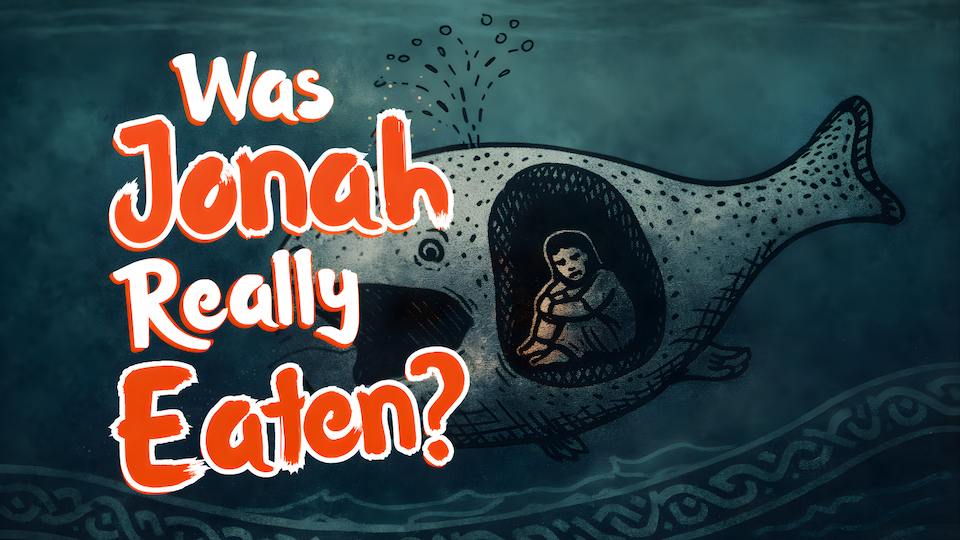
Was Jonah Really Eaten by a Fish?
Jonah 2 is a prayer, where Jonah describes himself as being both in the belly of the fish and in the belly of Sheol, drawing on ancient biblical and Near Eastern imagery in which the sea represents death, chaos, and descent into the underworld. Swallowed by the depths, Jonah understands his situation as a descent—down from Jerusalem, down to Joppa, down into the ship, down into the sea, down to the roots of the mountains—yet he confesses that even there he remains under the sovereign rule of Yahweh, whose waves and billows pass over him, whose presence cannot be escaped, and whose power reaches even into the abyss. As Jonah remembers Yahweh, God “remembers” Jonah in an active, covenantal sense, bringing Jonah’s life up from the pit before the bars of death close forever. The prayer culminates in repentance, renewed allegiance, and thanksgiving, rejecting idolatry understood not only as false worship but as refusal to obey God’s positive commands, and affirming that salvation belongs to Yahweh alone. The great fish is the means of Jonah’s deliverance rather than destruction, Jonah is restored to life and vocation, and the text insists on speaking in the material, miraculous language of Scripture itself, resisting attempts to dematerialize or disenchant the narrative. Doing so ultimately erodes the coherence of biblical faith, prayer, and hope.