
The Watchers: Ancient Entities in Modern Fatih (Truth and Shadow Podcast)
This conversation examines the biblical and theological significance of sinister spiritual forces, with a particular focus on the watchers and holy ones mentioned in Daniel and 1 Enoch. Scripture presents human history as a cosmic battlefield where unseen powers oppose God’s purposes, a theme often neglected in modern preaching out of caution, skepticism, or overemphasis on Christ’s victory. The discussion examines how early church fathers addressed these beings without embarrassment, how post-Enlightenment rationalism and modern esotericism have distorted our view of the supernatural, and how texts like 1 Enoch shed light on the origin of demons as the disembodied spirits of the Nephilim. Attention is given to passages such as Genesis 6, Psalm 82, Deuteronomy 32, Ephesians 6, and Revelation 12, showing their interconnection with the watchers. The narrative links ancient rebellion to contemporary cultural confusion, arguing that distorted echoes of the watchers appear in modern fascinations with aliens and fringe spirituality. Ultimately, the call is for Christians to reclaim a robust biblical theology of the supernatural, recognizing Christ not only as the Savior who comforts but also as the Warrior who conquers, and to prepare for renewed hunger for truth and deliverance in an age marked by deception and spiritual searching.

Giants, Enoch, and the 3 Top Misconceptions about Revelation
Anthony Delgado and Dre Binley explore the controversial topic of giants, with Anthony affirming their biblical and symbolic significance while noting the importance of reading Scripture within its full cosmological framework. He argues that giants represent tyranny and rebellion against God, and that their meaning is more theological than archaeological. The conversation then shifts to Revelation, where Anthony cautions against rigid interpretive systems, preferring to read the book as a symbolic narrative that combines myth and history to reveal the conflict between earthly kingdoms and Christ’s kingdom. He contrasts covenant theology with dispensationalism, affirming one consistent people of God and highlighting how Revelation ties into the broader biblical story. They discuss common misconceptions—that Revelation is scary, entirely future, or unnecessary—and reframe it as deeply pastoral and hopeful, especially when read through chapters 21–22. Finally, Anthony emphasizes that his interest in giants, Revelation, and related texts is ultimately about the gospel: God’s plan to redeem, transform, and restore humanity into his eternal family through Christ.

Revelation and the Dead Sea Scrolls
This conversation examines the significance of the Dead Sea Scrolls, their role in affirming the reliability of Scripture, and their connection to biblical theology. Anthony Delgado explains how the Scrolls demonstrate the care of scribes in preserving the biblical text, countering claims that the Bible is like a “telephone game.” The discussion then shifts to the Book of Enoch, clarifying that while it is not Scripture, it influenced Second Temple thought and appears to underlie New Testament passages such as Jude 6. Delgado highlights parallels between Enoch and Revelation, noting shared apocalyptic imagery, depictions of the unseen realm, and scenes of judgment that help contextualize John’s vision. Revelation presents a cosmic conflict in which loyalty to God or to contrary spirits determines one's destiny, with angels playing an active role in God’s governance. Ultimately, the dialogue frames this material not just as academic, but as fuel for worship, reminding listeners that God’s authority is supreme and that Scripture invites us into an awe-filled participation in his redemptive plan.

The Gospel Coalition Misrepresents Matthew Bates on the Gospel?! (What Your Pastor Didn’t Tell You)
This interview of Anthony Delgado regarding the Gospel Coalition’s critique of Matthew Bates’ book Beyond the Salvation Wars, hosted on the YouTube channel What Your Pastor Didn’t Tell You, offers an extended theological response to claims made against Bates’ gospel-allegiance model. The discussion centers on whether Bates has presented a revisionist gospel or deviated from orthodoxy, particularly in doctrines such as original sin, justification, and the bondage of the will. Delgado argues that Bates’ model does not deny salvation by grace through faith, but rather positions justification as an effect of the gospel, rather than the content of the gospel itself. He maintains that allegiance, properly understood, is not a “works-based” approach but a holistic response of loyalty and trust. Throughout, Delgado defends Bates’ use of biblical and early Christian sources, critiques the Gospel Coalition article's lack of scriptural grounding, and challenges the assumption that confessional Reformed positions are the singular standard of orthodoxy. He also emphasizes the importance of cross-tradition dialogue, the diversity of theological perspectives in the early church, and the need for humility and clarity when defining doctrines such as original sin and salvation.
![[Response] Annihilationism: Why I'm Not Convinced, Gavin Ortlund, Truth Unites](https://images.squarespace-cdn.com/content/v1/62432fcf146757356a34a5b9/1747797881145-LV2WGG1NQZLG06BTPCFP/ARE+THE+REPROBATE+%281%29.png)
[Response] Annihilationism: Why I'm Not Convinced, Gavin Ortlund, Truth Unites
Gavin Ortlund’s video on annihilationism raises important theological and pastoral questions about the nature of final judgment, which are explored through distinctions between annihilationism and eternal conscious torment (ECT). Annihilationism is well within the bounds of Christian orthodoxy, while some alternative views are not. Scriptural language about destruction, death, and perishing is highlighted as the dominant imagery for divine judgment, challenging the assumption that ‘eternal’ always implies consciousness. Key passages like Matthew 10:28 and Revelation 14 are evaluated carefully, with particular attention to genre, context, and apocalyptic tradition. Philosophical reflections on life, death, and ontology underscore the coherence of annihilationism, especially in light of God as the source of all being. While recognizing that some texts may support ECT more naturally, the overall argument calls for interpretive humility, lexical precision, and a pastoral posture that affirms both God’s justice and the need for salvation.

RING THEM BELLS Interview: The Gospel is BIGGER than you think!
In this episode of Ring Them Bells, Anthony Delgado is interviewed about his book ‘The Gospel is Bigger than You Think.’ The conversation centers on reclaiming the gospel as the announcement of Jesus’ kingship and the restoration of God’s rule over all creation. Rather than treating the gospel as merely the message of personal salvation or forgiveness of sins, the discussion emphasizes the kingdom narrative rooted in the Old Testament and fulfilled in Christ. Delgado explores how many churches functionally ignore the Hebrew Scriptures, creating a theological disconnect that weakens understanding of Jesus’ mission and authority. Drawing from biblical theology, Second Temple Jewish context, and the Divine Council worldview, he explains that the gospel includes Christ’s victory over spiritual powers and the reunification of heaven and earth through his reign. The discussion critiques the elevation of atonement theories as the gospel itself and urges a return to the broader biblical narrative, where allegiance to Jesus is the proper response to his enthronement. Themes of covenant loyalty, political idolatry, and the cosmic scope of redemption are woven throughout, culminating in a call for Christians to ground their identity not in national politics but in the kingship of Christ, living as ambassadors of a different kingdom in a polarized world.

Questions about the Gospel with Kaleb Amos on the Two Trees Podcast
Jon Dillon from The Two Trees Podcast hosts a dialogue between Kaleb Amos of Highways to Zion and Anthony Delgado, author of The Gospel is Bigger Than You Think, exploring questions and reflections on areas where Kaleb felt the book could have offered deeper explanation. The expansive nature of the gospel centers on the kingship of Jesus, the full arc of creation to new creation, and the mission of God's people. The gospel is contrasted with the diluted expressions found in Western "folk religion," where cultural Christianity often strips the message of its biblical depth. The importance of inspiring wonder at the grand narrative of Scripture is emphasized, showing how the story of God unfolds with epic significance. Key theological themes include the supernatural worldview present in texts like Deuteronomy 32 and Psalm 82, the dangers of syncretism, the biblical and systematic perspectives on Satan’s rebellion, and the pattern of typology across Scripture. Broader reflections highlight the value of engaging ancient sources, the importance of grounding ministry in a true vision of the gospel, and the ongoing effort to produce resources that faithfully transmit this vision to future generations.

Christus Victor and the Divine Council: Divine Council Worldview Podcast (EP024)
In this interview with Anthony Delgado on the Divine Council Podcast, the conversation with Mel and Rich explores how Mike Heiser’s work influenced the ministry and theological development at Palmdale Church and helped inspire the writing of The Gospel is Bigger Than You Think. The discussion explores how engagement with Divine Council theology transformed the church’s structure, worship practices, and liturgical rhythms, cultivating a model of ministry deeply rooted in biblical fidelity and vibrant Christian community. Key themes include the importance of recognizing Christ’s kingship in everyday obedience, the necessity of a lived testimony that reflects transformation, and a call to move beyond simplistic or transactional understandings of the gospel often found in American folk Christianity. Topics such as the role of allegiance in faith, the relationship between practice and transformation, and the need for intentional investment in discipleship are woven together, offering a vision of the Christian life shaped by the overwhelming magnitude of God's redeeming work and the invitation to participate fully in his kingdom.
Protestant Sacramentalism and ‘An Ancient Worship Movement’
Christian worship is understood as a union of physical practices and unseen spiritual realities, in which actions such as prayer, baptism, and communal confession actively shape sanctification and participate in a larger spiritual battle. Historical patterns of worship rooted in early Christianity are emphasized as formative and enduring, calling for a recovery of practices that are both deeply Christ-centered and communally embodied. This approach seeks to hold together doctrinal conviction, experiential depth, and missional purpose, encouraging unity across traditions while resisting both reductionism and empty ritual, and framing the Christian life as a continuous, lived participation in worship, formation, and spiritual warfare.

Reclaiming the Historical Role of Pastor-Theologian in the Church
The historical role of the pastor-theologian emphasizes that pastors should not only shepherd their congregations but also serve as serious theological thinkers who engage deeply with Scripture and provide intellectual leadership for the church. In modern contexts, many pastors have been reduced to program managers and motivational speakers rather than theological leaders who shape their communities. Recovering the pastor-theologian model involves restoring a commitment to theological study, equipping believers with sound doctrine, and defending the faith with clarity and conviction. This approach resists the separation of theology from pastoral ministry and acknowledges the necessity of grounding pastoral work in Scripture, prayer, and rigorous theological engagement.

Biblical Scholarship of the Dead Sea Scrolls, According to Wes Huff on the Joe Rogan Experience
In January 2025, biblical scholar Wesley Huff appeared on The Joe Rogan Experience to discuss the profound significance of the Dead Sea Scrolls (DSS) for biblical scholarship. During this wide-ranging conversation, Huff highlighted several key aspects of these ancient texts, including their role in validating biblical manuscript transmission, their diverse material composition, and the ongoing challenges scholars face in studying them. His insights were heard by millions of people–Christians and non-Christians alike. Wes outlined a framework for understanding how the DSS discoveries continue to shape our knowledge of ancient Judaism and early Christianity and support the authority of the Scriptures.
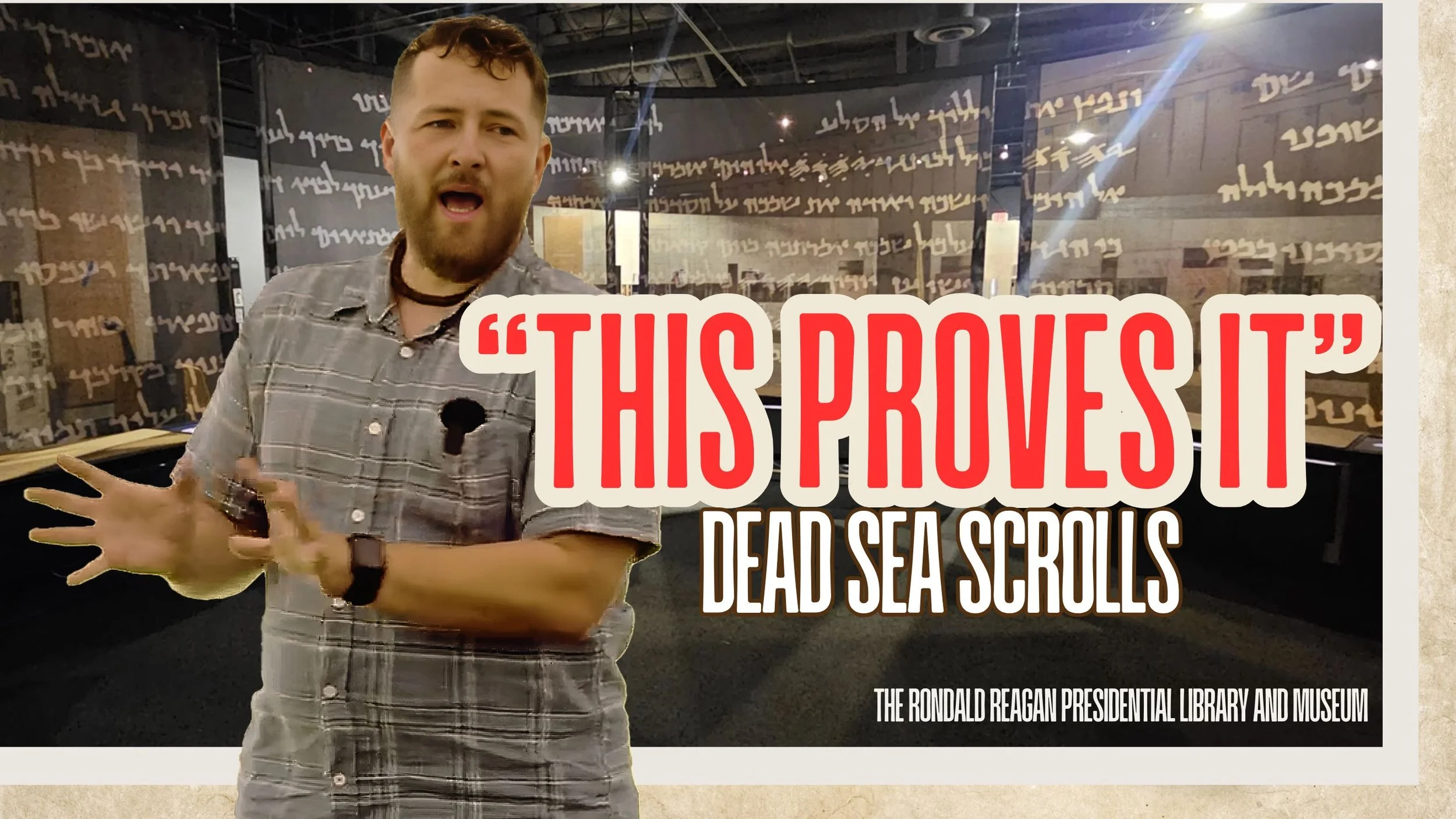
The Ancient Dead Sea Scrolls at the Reagan Library Museum
I was so excited to hear that the Dead Sea Scrolls were coming to the Reagan Library and could not wait to visit. I want to share some insights in this video. The exhibit is at the Dead Sea Scrolls exhibit at the Ronald Reagan Presidential Library. Running through September 2025, this exhibit showcases eight authentic scrolls alongside over 200 ancient artifacts, offering a rare glimpse into Second Temple Judaism and the preservation of biblical texts. Unfortunately time didn’t allow me to overview the artifacts, but you should go see those for yourself. In this video I overview the Beatitudes Scroll, the Damascus Document, the Psalms Scroll, and more, unraveling their significance for biblical theology, messianic expectations, and early Christian thought. If you're passionate about the Bible, archeology, and ancient history, you will not be disappointed.

Is the divine council biblical? (25 Divine Council Bible Passages)
Have you ever come across the phrase “the divine council” or “divine council worldview” and wondered why you haven’t heard much about it in the Bible? It’s there. But you may still ask, Who or what is the divine council in the Bible? What does it mean? And is the divine council really biblical? In short, Scripture presents God as surrounding himself with heavenly beings who deliberate and govern the cosmos on his behalf. What if I told you this concept runs from Genesis to Revelation and is central to understanding the biblical story?

Christus Victor, the Divine Council, and Theological Implications of Christ’s Kingship
Anthony Delgado and Joshua Sherman dive into key theological concepts surrounding the gospel, exploring the interplay between Christus Victor and penal substitutionary atonement. They discuss the centrality of Christ's kingship, the implications of the divine council worldview, and the practical aspects of discipleship. By examining the broader narrative of Scripture, they highlight how understanding God's wrath, love, and the cosmic powers of principalities and powers shapes a fuller comprehension of the gospel. The conversation also touches on how baptism serves as a pledge of allegiance to the kingdom of God and how believers are transformed through teaching and practical application. This interview offers an expansive view of the gospel’s reach, encouraging deeper reflection on its role in both individual and communal faith.
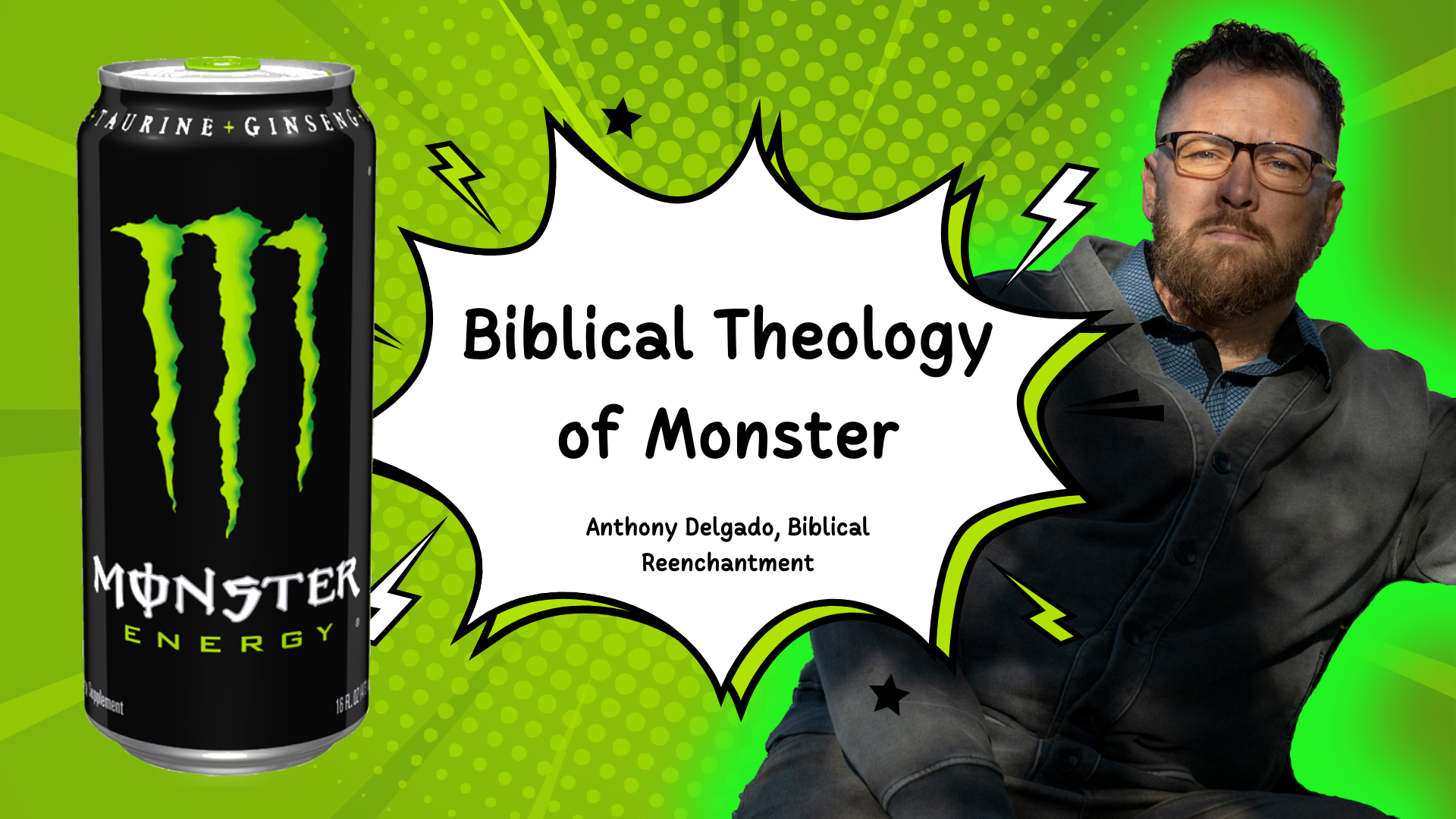
Monster Energy Drink
Monster Energy’s "Unleash the Beast" slogan promotes tapping into one’s inner power to overcome obstacles but viewed biblically, it evokes symbolism where beasts represent chaos and rebellion against God. And, of course, we need to talk about the notorious 666, supposedly displayed on the can. In Scripture, beasts in Revelation and Daniel symbolize worldly powers opposed to God's Kingdom, while Isaiah warns of the Leviathan, representing chaos. Christians must be cautious of embracing personal sovereignty that detracts from God's purpose. Instead of unleashing a beast, we are called to be transformed by the Holy Spirit, aligning with Christ. While drinking Monster Energy isn't inherently sinful, it can remind us to reject the "beast" mentality and stay focused on God's mission for our lives.

A Biblical Theology of Hurricanes
Anthony explores a biblical theology of hurricanes, examining how storms, wind, and waves are portrayed in scripture and what they symbolize. By diving into passages from both the Old and New Testaments, we discuss the connections between hurricanes, typhoons, whirlwinds, and God's power over chaos. We also explore themes of creation, judgment, and redemption, focusing on how hurricanes serve as powerful images of God's sovereignty and the brokenness of the world. Through stories like Jonah and Jesus calming the storm, we see how these natural disasters reflect deeper spiritual realities. Join us as we uncover the biblical perspective on hurricanes and their symbolism in both ancient and modern contexts.